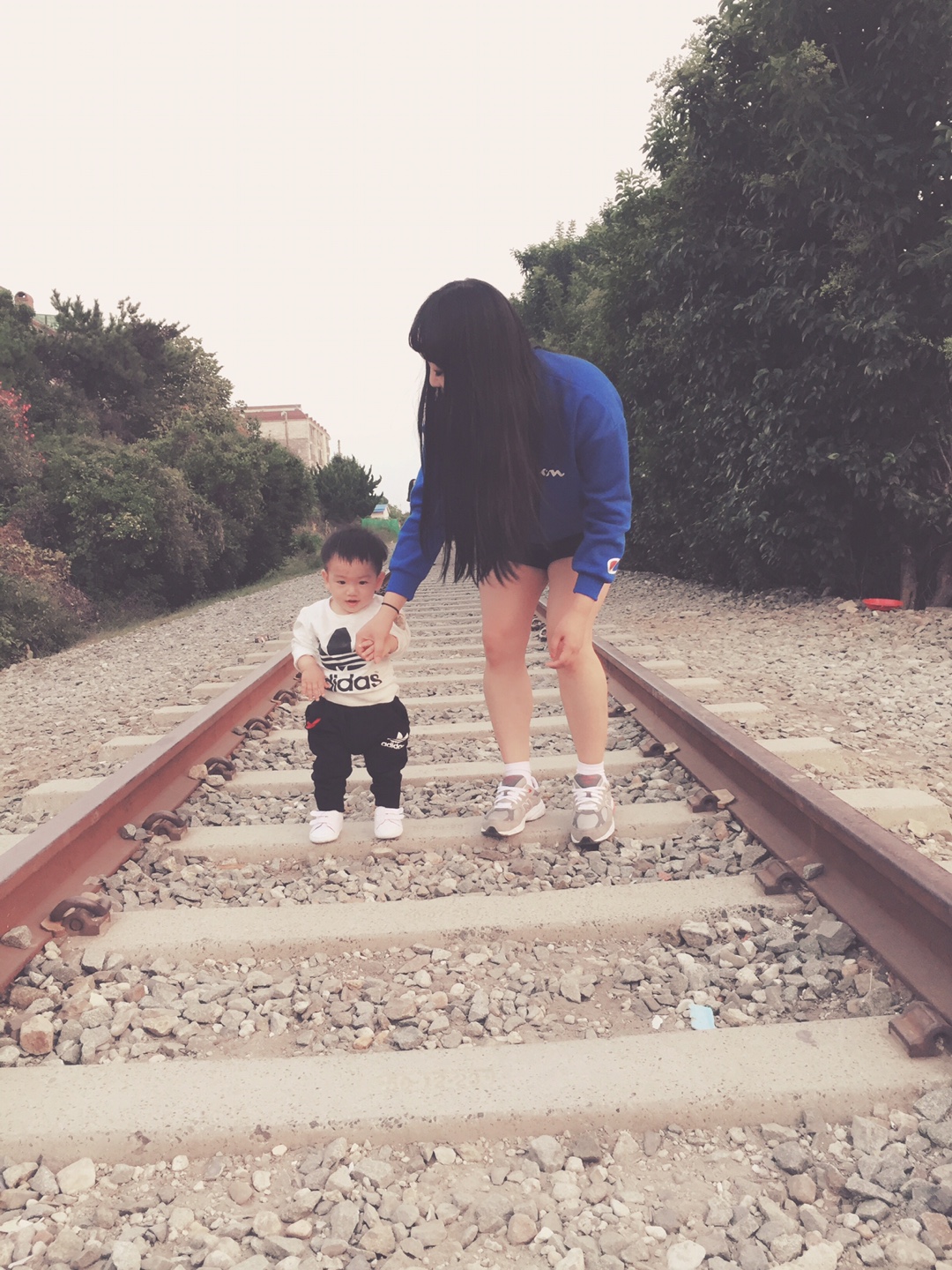
After adopting a healthy boy from Korea in 2006, Chris and Elizabeth Tiernan returned to Holt to adopt again in 2010. Embracing the changing needs among children in Korea, the Tiernans adopted Noah – a boy born with a normal neonatal health condition. In many ways, their journey to Noah reflects the recent changes in international adoption from Korea – including a longer wait from match to travel (due to a quota Korea places on the number of children joining families every year). It also illustrates why the Korea program is still one of Holt’s strongest. Click here to read more about the recent changes in Korea adoption.
by Chris Tiernan
We witness a miracle every time a child enters into life. But those who make their journey home across time & miles, growing within the hearts of those who wait to love them, are carried on the wings of destiny and placed among us by God’s very own hands. – Kristi Larson
The above quote encompasses our adoption journey, which ended with two beautiful boys coming home to us from Korea.
Even before we were married 15 years ago, my wife Elizabeth and I had always planned to adopt. We envisioned having a dynamic and loving family made up of both biological and adopted children. But after several years of attempting to get pregnant, infertility issues prompted us to start our adoption journey earlier than expected. However, since we already had a mindset to adopt, this decision was not a difficult one.
Eight years later, we have the family we could never have envisioned.
In 2010, we received an email from Holt notifying us that Korea was now accepting adoption applications for children with minor medical conditions. We knew that Korea had stopped accepting applications for some time, so it was exciting to receive the email. It was very important to us that we adopt from Korea, since we wanted a sibling from Korea for our first son Nathaniel (Nate) – who we adopted from Korea in 2006.
As our experience with Holt was extremely positive the first time, we contacted them without any hesitation.
We submitted our application in October of 2010 and, after furiously completing all the paperwork and home study requirements, we received our child assignment papers in March of 2011. It was so exciting to receive those first couple of pictures. Noah was 8 months old at the time.
We fell in love with him at first sight, and named him as soon as we saw the picture.
At the same time, it was a little scary as well. We knew going in that Korea was only releasing for international adoption children with at least some minor medical conditions. In preparation, we filled out a medical conditions checklist stating which conditions we would be open to. But until that first referral email, we had no idea what kind of condition that would be. Noah was born with an abnormal sonogram of the brainand, after some research, there was no definitive way to determine how – or if – it would affect him now or later in life. However, Holt’s medical staff reassured us that the results from these scans were fairly common as they usually indicate some sort of trauma during childbirth that doesn’t normally manifest further. Fortunately, all subsequent monthly scans came back normal and this alleviated some of our concerns.
We fell in love with him at first sight of his referral picture and could think of nothing else, except, “How soon can we go pick him up?!” What made the experience even more enjoyable was to see the joy on Nate’s face as he could finally see tangible evidence of his little brother. He was so excited and immediately started talking about all the things he could do with him.
Awaiting approval for the travel call was quite intense.
When Bob and Agnes Wells first adopted in 2002, they — like many families adopting from China at the time — came home with a healthy, infant daughter. Several years later, when they returned to Holt for their second adoption, the wait to adopt a healthy, infant girl had dramatically lengthened. After opening their hearts to special needs adoption, they were matched with a 6-year-old girl with delayed speech. As to be anticipated, they encountered some unknowns in China. And once home, they were again surprised — this time to discover that their second adoption was, in fact, easier than their first!
by Agnes Wells
Bob with Jane, Agnes with Margot.
In 2002, we adopted our older daughter, Jane, from China at the age of nine months. She was a healthy infant, and she made us perfectly happy. When we decided the time was right to increase the size of our family, we chose to adopt again from China. Because our experience had been so positive the first time, we also decided to adopt again through Holt.
When we began the process the second time, we decided to adopt a 2 to 3-year-old so that there would not be such a great age difference between our two children. As the standard process took longer and longer, we asked for a 3 to 5-year-old girl. We were not open to a child with many disabilities, but we did look into the special needs option and put our names on that list.
We got information about a couple of different children, but felt no pressure to choose any child who was not right for our family. Finally, after our dossier had been in China for four and a half years, we received a call about the child who would become our second daughter, Margot. She was 6 and a half at the time (Jane was 9 and a half), and her disability was that she had delayed speech and was sometimes difficult to understand.
Other than that, she was perfectly healthy.
We played “catch-up” with the paperwork, some of which had expired, but everyone was really helpful. We traveled to China in late February of 2011. This time, instead of being part of a group of several families, we were the only ones adopting through Holt.
The Holt team in China took very good care of us and was always around when we needed them. We had been given information that Margot had been in foster care, which was true, but we discovered when we met her that it had only been for a short time when she was a baby. The orphanage director said that she left foster care and returned to the orphanage because “it was not a good foster family.” He did not elaborate. I was worried that she would have a difficult time adjusting to living with a family, as is common among children who have grown up in institutions. Margot’s adjustment, however, has been a lot easier than I thought. She is a kind and sweet child. She gives us hugs and kisses. She likes to read and play and snuggle. She does get mad with her parents and fight with her sister, just like any other child. Continue reading The Unexpected Ease of Older Child Adoption
Congratulations to our dear friend Dana Johnson, MD, PhD, for receiving a lifetime achievement award from the Joint Council on International Children’s Services (JCICS). In 1985, Dr. Johnson and his wife adopted their son from Calcutta, India. A year later, he co-founded the International Adoption Clinic at the University of Minnesota – the first clinic of its kind in the world. As a pioneer in the field of international adoption medicine, he deepened our understanding of the conditions that shape the early lives of internationally adopted children. His research and legislative advocacy have improved the health, development and medical treatment of children both in country, and once home with their families. And through the years, he has been a wonderful partner to us in our service of orphaned, abandoned and vulnerable children. For that, we at Holt are forever grateful.
In 2005, we presented Dr. Johnson with the Harry Holt award. View the video below to learn more about Dr. Johnson’s extraordinary contribution to the field of international adoption medicine.
Win a trip to Korea! The Ministry of Foreign Affairs and Trade of the Republic of Korea are seeking 3-minute video submissions inspired by diverse Korean attractions, including traditional Korean culture, K-POP, landscape, economic development or your personal experiences related to Korea.
How to enter:
- Qualified applications must be foreigners (to Korea); no age limit.
- Make a video clip no longer than 3 minutes describing why you love Korea. (The video may be made with any device, such as a cellphone, digital camera, video camera, or digital device). *English or Korean submissions are preferred.
- Upload your video to YouTube or other legal video-sharing website
Contest runs through March 1-May 20, 2012 (12 weeks)
* If the video is not filmed in English or Korean, please include a complete description written in English or Korean along with your application.
Individual winners will be announced on June 11, 2012.
Important Notes: Prize can be rescinded if the video clip is proven to be plagiarized or winning work from other contests. Prize-winning works may be used to promote the Ministry of Affairs and Trade of the Republic of Korea. The copyright of the submitted works becomes vested in the Ministry.
The McBride family finds joy in two blessings from China. Wyeth came home in 2010, their daughter, Channing, in 2011.
By Jason and Ryan McBride
We read an interesting comment on an adoption blog recently. It said: “My infertility is a blessing.” It was made by a woman who had adopted two children of her own, then dedicated her life to helping others who couldn’t afford it.
It immediately sparked a conversation in our house, where one of us said what an absolutely bold, mildly insensitive, yet positively true statement it was.
Years ago, had we read a statement like this, we probably would have thrown the laptop into the sink, cursing its author as an ignorant fool with no concept of what we’d just gone through.
See… we struggled with infertility for a long time. Three years in fact.
Not the easier “I can’t get pregnant” kind of infertility either. Ours was worse. We had the kind where you waited month after disappointing month in the world of “infertility treatment” – a years-long saga of waiting rooms, biweekly ultrasounds, weight-gaining medications, morning “donations” before work and, of course, the ever-invasive IVF sessions where you pray for twins but… get neither. All of this inevitably ended in disappointment and the usual “We’ll get em’ next time, honey” conversation.
Yeah, it’s safe to say our battle with infertility was the most challenging, rock bottom point in either of our lives.
So how on earth could this woman dismiss her infertility so easily? Didn’t she know how tragic a subject this was for so many couples out there? It took us another three years, two adoptions, and two wonderful trips around the world to answer that question. The answer? Because it’s true. Our initial misfortune of infertility was a blessing in disguise. We just didn’t know it yet.
We came to Holt International in the summer of 2009 after years of failed infertility treatment. Don’t get us wrong, this wasn’t exactly a “second choice” for us. We had always planned to adopt, just not yet. Biological children were our first priority because well… that’s just what people do, right?
We inquired with a local branch office, having heard about Holt through a friend of a friend who had adopted two children from Korea and raved about their services. We were cautious in our optimism, but hopeful we’d find the next phase of our lives.
Dean, 7, is this week’s featured waiting child. Share Dean’s story to help find him a family!
Date of Birth: April 1, 2005
A little over a year ago, Holt social worker Marissa Leuallen visited a little boy waiting for a family in southeastern China. Here’s what she had to say about Dean*, then 6:
“I didn’t spend much time with him, but he was always smiling (very cute smile), clearly a bright and engaging child who is adored by his foster mom. She was the one who bragged about how they read the bible together and his ability to recite passages. He’s not at all fazed by his medical condition and was throwing around a ball like it was nobody’s business. He had a sparkle in his eyes (and those cute blue glasses) that I still remember, and it’s been a year!”
Last month, Dean turned 7 – and he is still waiting for a family. This, Marissa finds hard to fathom.
“He’s the kind of little boy you just want to pick up and squeeze,” she says. “I really can’t believe he has not found a family yet.”
Dean* was found abandoned on August 3, 2005, then about 4 months old. He spent a year at the local social welfare institute before joining a foster family at nearly a year and a half. In his foster family, he has grown into an active, talkative and confident boy. His foster mother says he likes learning and has a good memory. He loves basketball, soccer and playing the piano. Art is his favorite subject.
Energetic and happy, Dean can also be somewhat hyperactive, which makes it hard for him to pay attention in school. But he responds to questions asked of him and follows directions well.
Due to a congenital deformity in his left arm, Dean can’t use his left hand. He also has vision loss in his right eye and weakness in his left. With corrective lenses, however, he sees well. Dean’s “disabilities” do not seem to disable Dean much at all; his vision loss does not interfere with his daily life, and he has good motor skills, allowing him to accomplish tasks independently.
“We believe that Dean is a smart, active and lovely child,” write his social workers at the social welfare institute. “We hope that he could be adopted by a loving foreign family who is able to give him a good education and nurture him to grow happily and healthily.”
This is also what we hope for Dean.
An active family with older boys would be ideal for this energetic young man. His adoptive family should also have access to developmental resources that will help him reach his full potential.
Since 1997, the adoption tax credit has helped thousands of American families offset the high cost of adoption. Beginning in 2003, families that adopted children with special needs could claim the full credit, regardless of their qualified adoption expenses.
Ultimately, this credit has made it possible for children to join loving families — families that might not otherwise have been able to afford the cost of adoption. But right now, this important resource is in peril.
The current adoption tax credit is set to expire on December 31, 2012. If that happens, many American families may not be able to afford the cost to adopt. Consequently, fewer children will find the loving, permanent families they deserve. Although the credit remains through 2012, many families will not benefit because it is not refundable. In 2013, the credit will decrease to only $6,000. What’s more, it will only be available to very few adoptive families.
The adoption tax credit must continue. For many families, it may be the deciding factor in whether to adopt. And for many children, it is the critical link to a loving, stable home.
Congress must act now to pass legislation that will protect and extend the adoption tax credit.
On April 17, Representative Bruce Braley introduced the Making Adoption Affordable Act (HR 4373). If you are contacting your representative’s office, ask your representative to become a co-sponsor of HR 4373. There is no companion legislation in the Senate yet, so you can simply ask your senators to support an adoption tax credit that is inclusive, refundable, flat for special needs adoptions, and permanent.
For more resources and information about the campaign to save this important credit, visit Save The Adoption Tax Credit at www.adoptiontaxcredit.org.
U.S. non-immigrant and immigrant visa application fees have changed as of April 13, 2012. The fee for Immediate Relative and family preference applications (processed on the basis of an approved I-130, I-600 or I-800 petition) decreased from $404 to$230. All visa applicants must pay the fees in effect on the day of the payment, not on the day of the visa interview. Therefore, anyone who has already paid the combined $404 fee will not receive a refund even if the fee decreased by the time of their visa interview.
For further information, please refer to the press release issued by the Department of State, Office of the Spokesperson, on March 29, 2012, regarding visa processing fees. The change reduced the immigrant visa application fee to $230 from $330 and eliminated the $74 immigrant visa application surcharge that had previously brought the total fee to $404.
Contact Susan Soonkeum Cox, Vice President Policy & External Affairs, if you have questions or comments